Pulley Splint
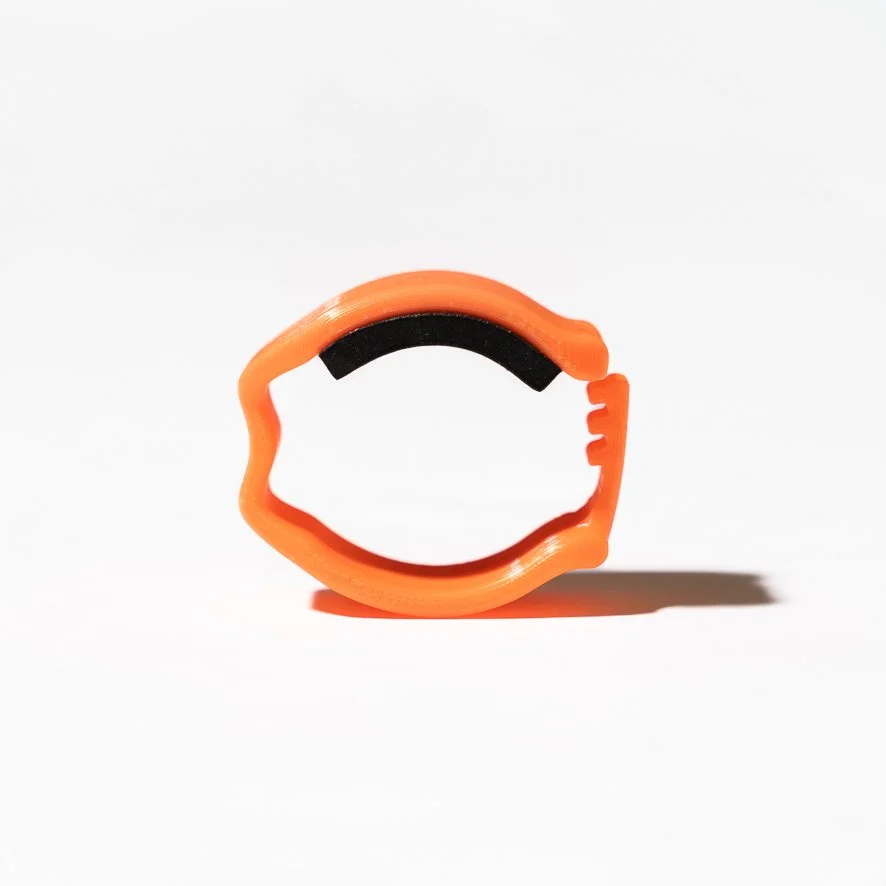
How and When to Use
-
A pulley splint is not needed for a grade I or II pulley injury.
-
Pulley splint 24/7 for the first 4-6 weeks.
Then, splint only with tissue loading exercises (and any activity involving gripping) for another 2 weeks. For climbing during this time, wearing the splint is optional, but you should be wearing some sort of support while climbing (e.g., h-taping).
Wearing a splint while climbing can be beneficial in that it provides more protection and provides a strong reminder to not overdo it, but it can be a bit cumbersome or uncomfortable, which is why it’s optional.
After that, transition to only h-taping while climbing for up to 6-months post injury.
-
Grade III (A4)
Pulley splint 24/7 for the first 4 weeks.
Then, splint only with tissue loading exercises (and any activity involving gripping) for another 2 weeks. For climbing during this time, wearing the splint is optional, but you should be wearing some sort of support while climbing (e.g., h-taping).
Wearing a splint while climbing can be beneficial in that it provides more protection and provides a strong reminder to not overdo it, but it can be a bit cumbersome or uncomfortable, which is why it’s optional.
After that, transition to only h-taping while climbing for up to 6-months post injury.
-
Pulley splint + h-taping underneath 24/7 for the first 6-8 weeks.
Then, splint + h-taping only with tissue loading exercises (and any activity involving gripping) for another 2 weeks. For climbing during this time, wearing the splint is optional, but you should be wearing some sort of support while climbing (e.g., h-taping).
Wearing a splint while climbing can be beneficial in that it provides more protection and provides a strong reminder to not overdo it, but it can be a bit cumbersome or uncomfortable, which is why it’s optional.
After that, transition to only h-taping while climbing for up to 1 year post injury.
-
This grade of injury requires consultation from a medical professional and thus use of a pulley support should be guided by them.
How Tight to Wear It
The pulley splint should be snug enough that it does not move easily on its own, but not so tight that it causes pain or discomfort at rest or during activity.
You should feel some increase in pressure from the support over the pulley when loading the fingers, especially in a crimp position, but there should be only light pressure when at rest.
If you can’t feel any increase in pressure when loading the fingers, it’s too loose.
If you develop bruising or pain on the backside of your finger or feel like blood flow is being restricted, it’s too tight.
Having to adjust the splint tighter and looser throughout recovery is normal. Your finger size may change over the course of a day and over the course of your recovery. It’s OK to adjust or even swap sizes throughout the day as needed.
At night, keep it slightly looser. Our hands tend to swell a bit while we sleep, particularly if they’re recovering from injury, so it’s best to slightly loosen the splint when you go to bed to avoid being awakened by discomfort.
Skin Irritation / Redness
While the built-in foam padding should mitigate most or all irritation from the splint on the back (dorsal) side of your finger, some people may still experience some depending on skin sensitivity, amount of swelling, etc.
If you experience irritation or redness, first make sure you’re not simply wearing the splint too tight. If it’s still an issue, a convenient way to add an extra protective layer (that also happens to be waterproof) is with a hydrocolloid patch (often referred to as an “acne patch” or “scar patch”), which are readily available on Amazon and most drug stores.
Avoid Hinge Stress
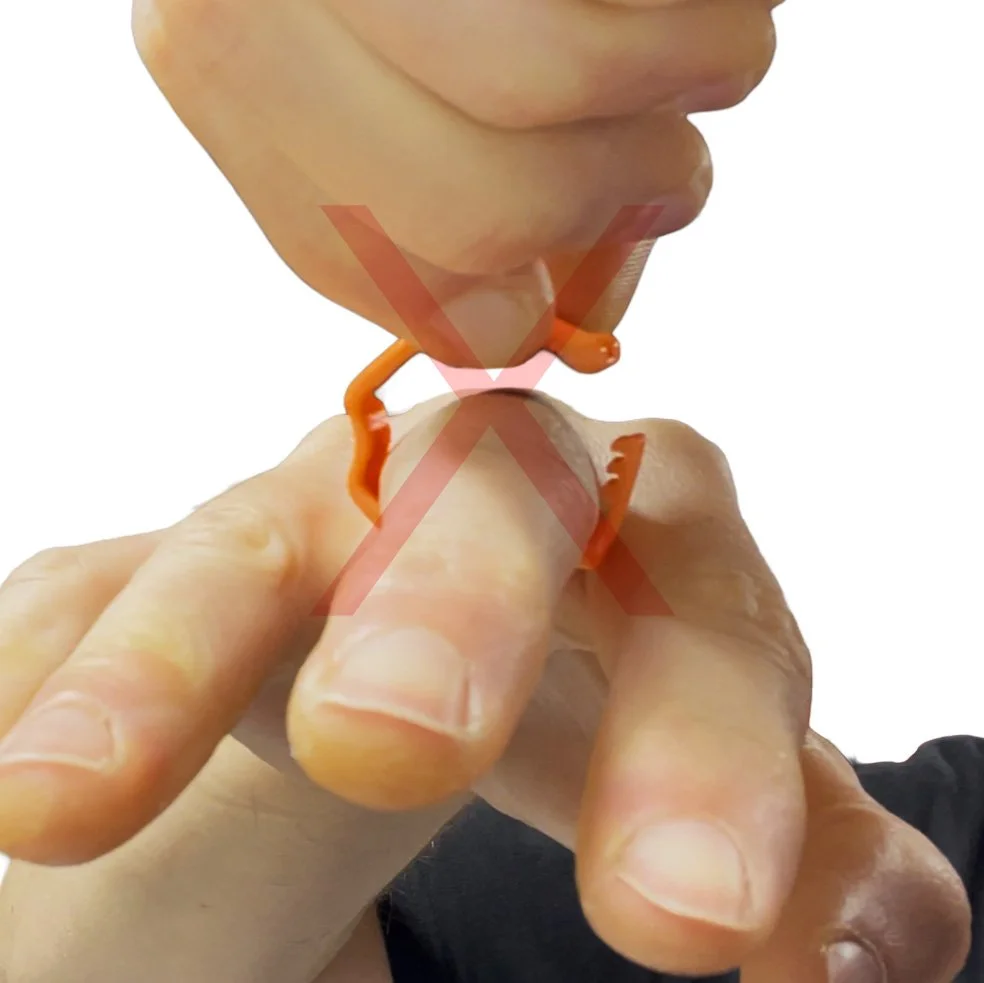
To avoid overstressing the hinge and potentially breaking the splint, do not pull it back excessively (wide open) when applying and removing it.
Cleaning
With prolonged use, the foam padding may start to smell a bit sour due to the build-up of sweat and grime.
To fix this, you can clean the splint and padding by washing it with a 50/50 mixture of warm water and white vinegar. Dish soap can work in place of vinegar if that’s all you have, though it may not be as effective at removing the smell.
Allow it to air dry before resuming usage.
Splint Creep
Many plastics will eventually exhibit some amount of “creep” when put under load for long durations. After several weeks of use, you may notice that the latch wants to stay in the position you typically wear it in, rather than “springing back” when unlatched. This is normal and shouldn’t pose a problem from an efficacy standpoint.